
INSIGHTS
SEPTEMBER 06. 2026 • 7 MIN READ
When the plastic part gets big – there are more options than you might think
Large components are often produced in steel, aluminium or traditional composite. But what if the same part could be produced in a material that is lighter, corrosion-resistant and still handles significant mechanical loads?

Espen Johansen
Project Engineer, Plexx

Through our sister company Baltic RIM, Plexx can offer Norwegian customers the production of large and complex components in DCPD and advanced composite materials.
That opens up interesting possibilities – not least for industry, agriculture, construction, energy and other businesses that need large components in small and medium-sized series.
An alternative to metal and traditional composite
One of the specialities is DCPD – dicyclopentadiene – which is processed by Reaction Injection Molding, or RIM.
The material combines several properties that become interesting once components get large:
-
high impact strength
-
low weight
-
good resistance to corrosion and chemicals
-
considerable design freedom
-
scope for complex geometries and integrated functions
-
The result is that components traditionally made in metal or composite can, in some cases, be replaced by a single molded plastic component.
That can reduce weight, the number of parts, and the amount of assembly needed afterwards.
Particularly interesting for large components
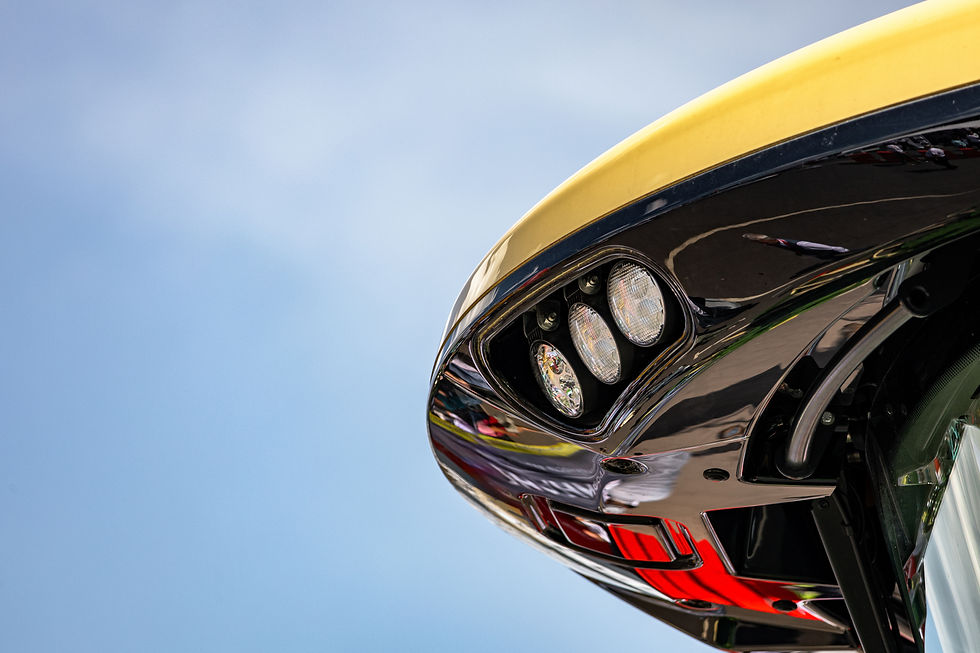
One of the major advantages of RIM technology is the ability to produce large, complex parts.
Typical applications include body panels, guards and covers for construction and agricultural machinery, enclosures for industrial equipment, and larger components in sectors such as energy.
Baltic RIM has the capacity to produce everything from smaller panels to very large structures – up to around 8 meters in diameter.
That makes the technology attractive in projects where conventional injection molding is either difficult or demands very large investment.

You don't need to produce 100,000 units
When we talk about molded plastic products, one objection comes up again and again:
“Our volume is too small.”
That need not be the case.
Baltic RIM works specifically with industrializing products and production that can start at relatively small volumes and scale as demand grows. A project might start with 10–100 components, and production can later be increased to 500, 1,000 or more. That makes the technology especially relevant for Norwegian industry, where products are often specialized and production runs considerably smaller than in, say, the automotive industry.
From several parts to a single component
Another interesting opportunity comes up on the drawing board. The design freedom in DCPD/RIM means that functions which previously required several separate components can, in some cases, be integrated into one part. That can mean:
fewer components → less assembly → lower weight → simpler production.
So it can be just as interesting to look at how the product is designed as at which material today's component is made from. If you have a large panel, enclosure or body part in steel, aluminum or composite, it may be worth investigating whether it could be designed differently.
"Maybe today's metal component should really have been plastic?
Advanced composite production as well
DCPD is not the only option. Through Baltic RIM, Plexx can also offer advanced composite components produced using, among others:
Out-of-autoclave pre-preg, resin infusion and RTM Light.
These methods are used where there are high demands on the combination of low weight, strength and durability. They make it possible to choose the production process to suit each individual component – rather than trying to fit every product to a single production method.

From small radomes to structures 8 meters across
One highly specialized area is the production of radomes – protective structures around radar and antenna systems.
A radome protects sensitive equipment from weather and external influence, while allowing electromagnetic signals to pass through with as little interference as possible.
Baltic RIM produces both flat radomes for phased-array antennas and large radomes up to 8 meters in diameter, and works with solutions for frequency ranges from C-band to Ka-band.
This is particularly relevant in communications, radar, satellite systems and other technology applications with high demands on material properties.

Maybe today's metal component should really have been plastic?
For us at Plexx, the partnership with Baltic RIM is above all about being able to offer more production options.
Not every product suits conventional injection molding. Not everything needs to be made in metal. And a run of a few hundred large components calls for a completely different production strategy than millions of small plastic parts.
That is why it pays to involve us early.
Frequently asked questions
DCPD is dicyclopentadiene, a material processed by Reaction Injection Molding (RIM). The method is particularly suited to large, complex components that need to be light, impact-resistant and corrosion-resistant.
DCPD/RIM combines high impact strength, low weight, good resistance to corrosion and chemicals, considerable design freedom, and scope for complex geometries and integrated functions.
Baltic RIM can produce everything from smaller panels to very large structures – up to around 8 meters in diameter.
Yes. A project can start with 10–100 components and scale as demand grows – to 500, 1,000 or more, for example. That makes the technology relevant for specialized Norwegian industry.
Typical applications are body panels, guards and covers for construction and agricultural machinery, enclosures for industrial equipment, and larger components in energy and other technology applications.
A radome is a protective structure around radar and antenna systems. It protects sensitive equipment from weather and external influence, while allowing electromagnetic signals to pass through with as little interference as possible.
Through Baltic RIM, Plexx can also offer advanced composite components produced using out-of-autoclave pre-preg, resin infusion and RTM Light.
Want to know more?
We advise on material selection, production methods and design for production — from prototype to series. Contact us and we will find the best solution together.