
INSIGHTS
NOVEMBER 15, 2025 • 8 MIN READ
Thermoplastics — one of the most important materials of the last hundred years
Elastic, soft, hard, UV-resistant, economical and environmentally friendly. Thermoplastic is one of the most versatile materials there is – and the one we have specialized in since 1954.

Espen Johansen
Project Engineer, Plexx

Thermoplastics offer advantages such as recyclability, low weight, high chemical resistance and flexibility in production. These properties make the material popular across a range of industries, including automotive, packaging, electronics and many other sectors where lightweight, flexible and adaptable materials are desirable.
In this article, we take a closer look at the key advantages of thermoplastics, why the material has become so dominant, and how Plexx uses it to solve a wide variety of tasks – from advanced technical equipment to large covers and containers.
A material that has shaped the last century
Thermoplastics differ from thermosets in that they can be melted and reshaped again – over and over. This means the material is both easy to process industrially and part of a circular value chain, where surplus material and discarded products can go straight back into production.
The combination of low weight, design freedom, chemical resistance and low production costs is why thermoplastics are the first choice in everything from the automotive industry and medical technology to packaging, electronics, construction and agriculture.

"Thermoplastic is elastic, soft, hard, UV-resistant, economical and can be used in an environmentally friendly way."
Ten advantages of thermoplastics
Here are some of the biggest advantages of choosing thermoplastics as a material in product development and industrial production:
01
Recyclability
Thermoplastic can be melted and reshaped multiple times without the material losing its basic properties. This creates a circular value chain where surplus material and worn-out products can go straight back into production.
02
Flexibility in processing
The material can be shaped using many different production methods – injection molding, extrusion, vacuum forming, rotational molding and machining. This gives great freedom in terms of shapes, sizes and volume.
03
Low weight
Most thermoplastics have low density, making them lightweight materials. This is especially important in the automotive and aerospace industries, where weight savings lead to lower energy consumption and higher efficiency.
04
Shock-absorbing properties
Thermoplastics such as polypropylene (PP) and polyethylene (PE) have good shock-absorbing properties. This makes them well suited for protective equipment and packaging, where reducing impact damage is important.
05
High chemical resistance
Many thermoplastics have high resistance to acids, bases and a range of solvents – making them suitable for the chemical industry, tanks and piping.
06
Good insulation properties
Thermoplastics such as PVC and polycarbonate have good electrical insulation properties, and are used in cables, insulators and other equipment where electrical insulation is critical.
07
Kostnadseffektiv produksjon
Injection molding is relatively inexpensive for large volumes, making thermoplastics a cost-effective solution for mass production. Low material costs and the ability to reuse surpluses make production even more economical.
08
Tilpasningsdyktighet
The materials can be modified to provide special properties such as improved UV resistance, fire retardancy, extra flexibility or stiffness – from consumer goods to highly specialized technical components.
09
Fast production time
The material heats up, shapes and cools down quickly, which provides short production times and is a major advantage in high-volume production in the automotive and consumer products industries.
10
Wide range of properties
Thermoplastics come in many varieties, with different combinations of impact strength, flexibility, heat resistance and chemical resistance – from soft products to hard, durable components.
From consumer products to heavy-duty applications
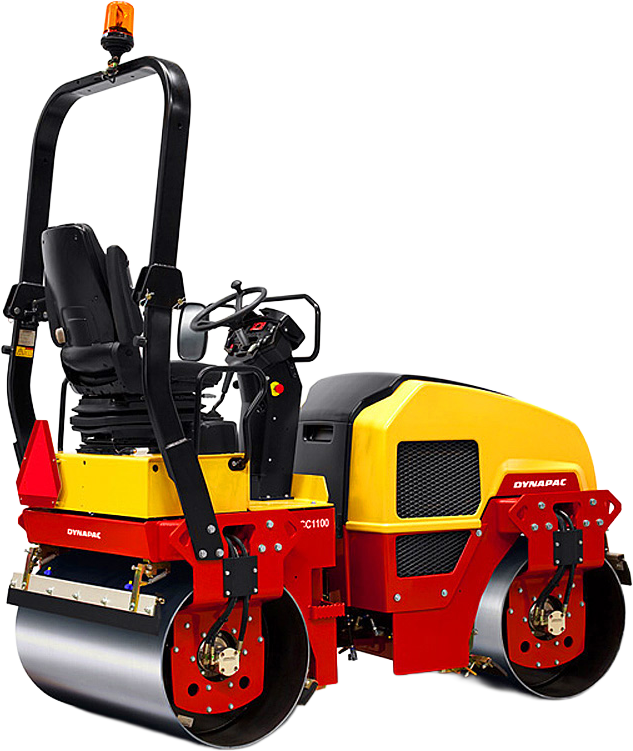
Lightweight covers and structural parts Thermoplastics are widely used for covers, panels and structural parts in vehicles, construction machinery and industry. The low weight reduces fuel consumption and simplifies handling, while combinations such as ORS (Opido Reinforcement System) provide significant stiffness and load-bearing capacity without adding much weight.
The result is structures that withstand loads traditionally requiring metal – but with faster production, fewer finishing steps and the ability to integrate features such as air intakes, mounting points and channels into a single part.

From consumer products to heavy-duty applications
A great example is engine covers and panels for construction machinery. Here, the material has to withstand vibration, temperature fluctuations, chemicals and UV exposure – while still looking good for years. Thermoplastic with the right additives meets all these requirements in a single material.
The same material is used in everything from everyday products like packaging and household items, to technical components in medical equipment, electronics and defense. It's this versatility that makes thermoplastics so important industrially.
Plexx — thermoplastics since 1954
Plexx has been working with various types of thermoplastics since 1954. We have constantly adopted the latest technology and the best production methods, and are today one of the leading players in the Nordic region in the industry. Our experience spans all four of our core methods – injection molding, vacuum forming, rotational molding and machining.
Would you like more information about plastic thermoforming, or help choosing the right material and production method for your project? Contact our technical department – we will respond quickly and help you from the first idea to the finished product.

Frequently asked questions
Thermoplastics can be melted and reshaped multiple times without changing their basic properties. Thermoplastics, on the other hand, chemically harden during processing and cannot be remelted — making them difficult to recycle. Plexx specializes exclusively in thermoplastics, precisely because the material combines flexibility in production with a sustainable circular value chain.
The most common are polyethylene (PE), polypropylene (PP), ABS, polycarbonate (PC), PETG, PMMA (acrylic), PVC and polyamide (PA). In addition, we work with high-performance materials such as PEEK, PPS and PSU when the requirements for temperature, chemistry or mechanical strength are extra high. Each type has its own application, and we advise on the choice of material early in the process.
In principle, thermoplastics can be melted and reshaped many times. In practice, the molecular chains will gradually become shorter with repeated processing, which can affect some mechanical properties. With proper sorting, cleaning and addition of virgin material, recycled thermoplastics can be incorporated into new products of good quality — even in demanding applications.
Plexx uses four core methods: injection molding for high volumes of complex, precise parts; vacuum forming for large surfaces and covers; rotational molding for large, hollow products such as tanks and sumps; and machining for high-tolerance technical components. We select methods based on geometry, volume, material requirements, and economics — often combining multiple processes in the same project.
Thermoplastics are fully recyclable and can be melted down and reused — that’s one of the material’s strengths. Low weight also means lower transportation emissions, and local production in Norway further reduces the footprint. Combined with the long lifespan of the products and low energy consumption per unit produced, thermoplastics are a good environmental choice compared to many alternative materials.
It all depends on the thermoplastic. Standard materials such as PE and PP have a service limit of 80–110 °C. Technical plastics such as PA and POM can withstand higher temperatures, while high-performance materials such as PEEK and PPS remain stable well above 200 °C. For applications with specific temperature requirements, we always match the material to the operating environment.
Plexx has been working with various types of thermoplastics since 1954. We have constantly used the latest technology and the best production methods, and are today one of the Nordic countries' leading players in the industry. Our experience and breadth of methods mean that we can provide real advice — regardless of which method the customer initially had in mind.
Thermoplastics are often the first choice when low weight, corrosion resistance, chemical resistance, electrical insulation or design freedom are important. With the right material selection and reinforcement methods such as ORS (Opido Reinforcement System), thermoplastics can replace metal in demanding structures — while also providing lower production costs, shorter lead times and simpler logistics.
The material selection should start with a mapping of the requirements: mechanical load, temperature range, chemical environment, lifespan, optics and production volume. Based on this, we recommend materials and production methods. We recommend getting involved early — preferably already in the concept phase — so that the material selection is correct from the start, and the product is optimized for both function and production cost.
Are you going to use thermoplastic in your next project?
We advise on material selection, production methods and design for production — from prototype to series. Contact us and we will find the best solution together.