


Larger formats than injection molding allows – up to 2.5 × 4.5 m and 700 mm depth
Low tooling costs, quick commissioning and easy changeover
DFM advice on material selection, grinding angles, radii and surface
WHY VACUUM FORMING
Profitable on large products
Vacuum forming provides a unique surface finish as the product only has tool contact on one side. The method allows great freedom in design and geometry, and the thermoplastic can be supplied in many colors, qualities and surfaces.
The process has limited environmental impact – no solvents, no hazardous emissions. Excess material is granulated and 100% recycled.
As part of the SP Group, we have some of Europe's largest thermoforming machines, and can produce panels, machine covers and vehicle components up to 2.5 × 4.5 m with a depth of 700 mm. Five-axis CNC milling takes care of machining and retrofitting when required. Everything is done in-house for complete deliveries.
HOW IT WORKS
Vacuum forming in five steps

1. Formverktøy
The tool is placed in a vacuum forming machine.
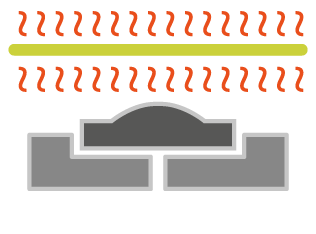
2. Oppvarming
The plate to be shaped is heated with top and bottom heat.

3. Pre-winding
The hot and soft sheet is inflated. The molding tool is then moved up against the plastic material.

4. Vacuum forming
Using vacuum, the plastic material is shaped over the mold tool.

5. Cooling
The plastic cools, the mold tool is lowered, and the product is ready for further processing.

CAPACITY
What we can deliver
FORMAT
Opp til 2,5 × 4,5 m
DEPTH
Up to 700 mm
PLATE THICKNESS
1 – 12 mm
TOOL
Aluminum, wood or composite
VOLUME
Prototype to medium series
FINISH
5-axis CNC machining and assembly as required
ABS
Impact-resistant and easy to machine – cabinets and covers.
PETG
Clear, impact-resistant and easy to shape – displays and protection.
PC (polycarbonate)
High impact strength and temperature resistance.
HIPS
Cost-effective for interior parts and packaging.
HDPE/PP
Chemically resistant solutions for industry and aquaculture.
PMMA (acrylic)
Optical clarity and UV stability – display and light panels.
MORE ABOUT VACUUM FORMING
Several methods of vacuum forming
Twin Sheet for hollow, rigid structures. High Pressure for detailed surfaces. We combine the methods where it makes sense for your product.
Twin Sheet - twice as good

Two sheets are formed and welded together in the same process - hollow, dense structures without glue. Strong and rigid with low weight, and can be filled with foam inside.
High Pressure - forming under pressure

Vacuum forming with overpressure of up to 5 bar - detailed surfaces and sharp radii, on par with injection molding, but at a fraction of the tool cost.
WHEN TO USE VACUUM FORMING
Choose vacuum forming when…
The part is too large or the volume is too low for injection molding
You need a light, rigid shell over a larger area
Tool costs must be kept down
The design can be adapted to grinding angles and thermoforming rules
You are considering hollow, dense structures (Twin Sheet)
FAQ
Frequently asked questions about vacuum forming
Vacuum forming has significantly lower tooling costs and is well suited for large parts in small to medium series. Injection molding provides higher precision and finer surfaces, but requires steel or aluminum tools and higher volumes to be profitable.
Up to 2.5 × 4.5 m with up to 700 mm mold depth — among Europe's largest thermoforming machines. Sheet thickness from 1 to 12 mm.
ABS, PETG, PC, HIPS, PMMA (acrylic), HDPE and PP are the most common. We help with material selection based on requirements for strength, temperature, chemicals, optics and surface.
Vacuum forming is competitive from prototype up in small to medium series. Low tooling costs make the threshold low — even for custom products.
Aluminum, wood or composite tools depending on volume and tolerance requirements. Aluminum for series production, wood and composite for prototypes and zero series.
Yes. We have 5-axis CNC milling, assembly and finishing as needed
Vacuum forming uses no solvents and produces no hazardous emissions. All excess material is granulated and 100% recycled.
Twin Sheet is suitable when you need hollow, rigid structures without glue. High Pressure is used when you need sharper details and finer surfaces than pure vacuum forming can provide.